

Post Date:23,Jun,2025
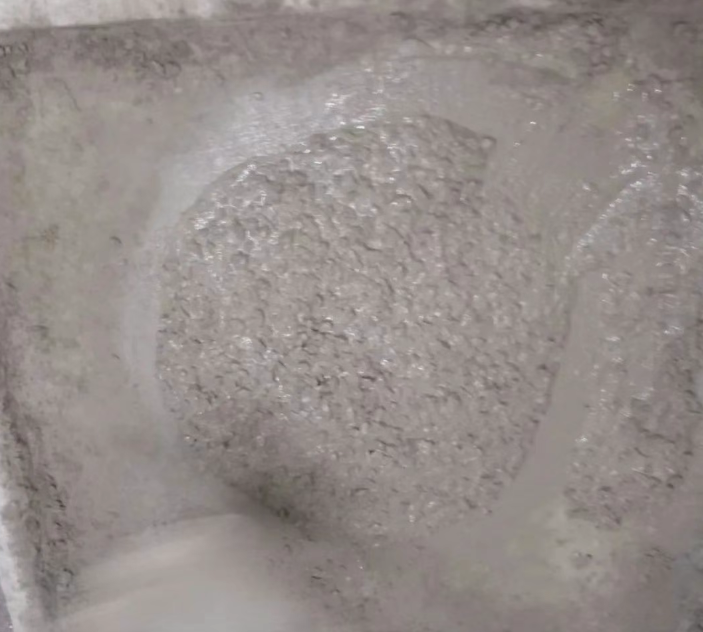
Step 1: testing the alkalinity of cement
Test the pH value of the proposed cement, and use a pH, pH meter or pH pen to test. The test results can be used to preliminarily determine: whether the amount of soluble alkali in the cement is large or small; whether the admixture in the cement is acidic or inert material such as stone powder, which makes the pH value low.
Step 2: investigation
The first part of the investigation is to obtain the clinker analysis results of the cement. Calculate the content of four minerals in the cement: tricalcium aluminate C3A, tetracalcium aluminoferrite C4AF, tricalcium silicate C3S and dicalcium silicate C2S.
The second part of the investigation is to understand what kind of admixtures are added when the clinker is ground into cement and how much is added, which is very helpful for analyzing the causes of concrete bleeding and abnormal setting time (too long, too short).
The third part of the investigation is to understand the variety and fineness of concrete admixtures.
Step 3: Find the saturated dosage value
Find out the saturated dosage value of the high-efficiency water reducer used for this cement. If two or more high-efficiency water reducers are mixed, find the saturated dosage point through the cement paste test according to the total amount of the mixture. The closer the dosage of the high-efficiency water reducer is to the saturated dosage of the cement, the easier it is to get better adaptability.
Step 4: Adjust the plasticization degree of the clinker to the appropriate range
Adjust the degree of alkali sulfation in the cement, that is, the plasticization degree of the clinker to the appropriate range. The calculation formula for the SD value of the plasticization degree of the clinker is: SD=SO3/(1.292Na2O+0.85K2O) The content values of each component are listed in the clinker analysis. The SD value range is 40% to 200%. If it is too low, it means that there is less sulfur trioxide. A small amount of sulfur-containing salt such as sodium sulfate should be added to the admixture. If it is too high, it means that the molecule is larger, that is, there is more sulfur trioxide. The pH value of the admixture should be slightly increased, such as sodium carbonate, caustic soda, etc.
Step 5: Test-mix composite admixtures and find out the type and dosage of setting agents
When the sand quality is poor, such as high mud content, or when all artificial sand and superfine sand are used to mix concrete, after the net slurry test obtains satisfactory results, it is necessary to continue to do the mortar test to further adjust the adaptability with the admixture.
Step 6: Concrete test For concrete test, the amount of the mixture should not be less than 10 liters
Even if the net slurry is adjusted well, it may still not meet expectations in the concrete; if the net slurry is not adjusted well, the concrete may have greater problems.After a small amount of test is successful, sometimes a large amount needs to be repeated, such as 25 liters to 45 liters, because the results may still be slightly different. Only when a certain number of concrete tests are successful can the adaptability adjustment be completed.
Step 7: Adjust concrete mix ratio
You can increase or decrease the amount of mineral admixtures appropriately, and change the single admixture to double admixture, that is, use two different admixtures at the same time. There is no doubt that double admixture is better than single admixture; increasing or decreasing the amount of cement can solve the defects of concrete stickiness, rapid slump loss and concrete bleeding, especially surface sand exposure; slightly increase or reduce the amount of water; increase or decrease the sand ratio, or even partially change the type of sand, such as the combination of coarse and fine sand, natural sand and artificial sand, etc.
Post time: Jun-23-2025