

Post Date:28,Sep,2026
I. Molecular Structure Design of Polycarboxylate Superplasticizers
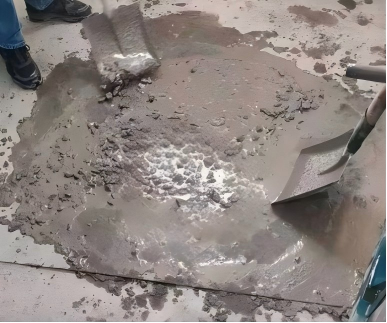
Polycarboxylate high-performance superplasticizers can reduce bleeding in various ways. First, they reduce water demand while maintaining the workability of cement-based materials; a reduction in the mixture’s water content leads to a significant decrease in bleeding. Second, they possess excellent dispersing capabilities, fully dispersing cement particles in water and preventing the settling of larger particles, thereby reducing bleeding. Third, polycarboxylate molecules adsorb onto the surface of cement particles, causing mutual repulsion; this reduces the effective particle size of agglomerated cement clusters, slows down the settling rate, and decreases bleeding. Another advantage is the high degree of customizability in the molecular structure of polycarboxylate superplasticizers. Lower molecular weights enhance dispersibility and slightly reduce bleeding, though the associated loss of concrete fluidity must also be considered. Factors such as the content of anchoring groups on the backbone, the density of grafted chains, and the length of side chains also influence concrete bleeding, much like molecular weight does.
II. Addition of Admixtures to Polycarboxylate Superplasticizers
Incorporating admixtures—such as air-entraining agents, defoamers, accelerators, retarders, and viscosity modifiers—into polycarboxylate superplasticizers can improve bleeding characteristics. Air-entraining agents reduce the surface tension of water and introduce microscopic air bubbles. Due to differences in electrostatic charge polarity, these bubbles adsorb onto cement particle surfaces; this lowers the average density of the bubble-laden particles, slows the settling rate, and consequently reduces bleeding. Defoamers operate via a similar mechanism but produce the opposite effect.
Accelerators shorten the setting time, thereby reducing the duration available for solid particle settling and decreasing surface bleeding. Conversely, retarders increase the bleeding rate by extending the time it takes for water to rise to the surface of the fresh cement paste.
Viscosity modifiers are used to alter the viscosity of the mixing water, thereby regulating the settling rate of solid particles and controlling bleeding.
Post time: Sep-28-2026