

Post Date:26,May,2025
Dispersion stability of disperse dyes:
Disperse dyes are immediately dispersed into fine particles when poured into water. The particle size distribution is developed according to the binomial, with an average value of 0.5 to 1 micron. The particle sizes of high-quality commercial dyes are very close, with a high percentage, which can be shown by the particle size distribution curve. Dyes with poor particle size distribution have coarse particles of varying sizes and poor dispersion stability. If the particle size greatly exceeds the average value range, tiny particles may recrystallize. Due to the increase in recrystallized large particles, the dye precipitates and deposits on the wall of the dyeing machine or on the fiber.
In order to make the tiny particles of the dye a stable aqueous dispersion, there must be a sufficient concentration of boiling dye dispersant in the water. The dye particles are surrounded by the dispersant, which prevents the dyes from getting close to each other and preventing them from agglomerating or agglomerating. The charge repulsion of anions helps stabilize the dispersion. Commonly used anionic dispersants include natural lignin sulfonates or synthetic naphthalenesulfonic acid dispersants: there are also non-ionic dispersants, most of which are alkylphenol polyoxyethylene derivatives, which are specially used for synthetic paste printing.
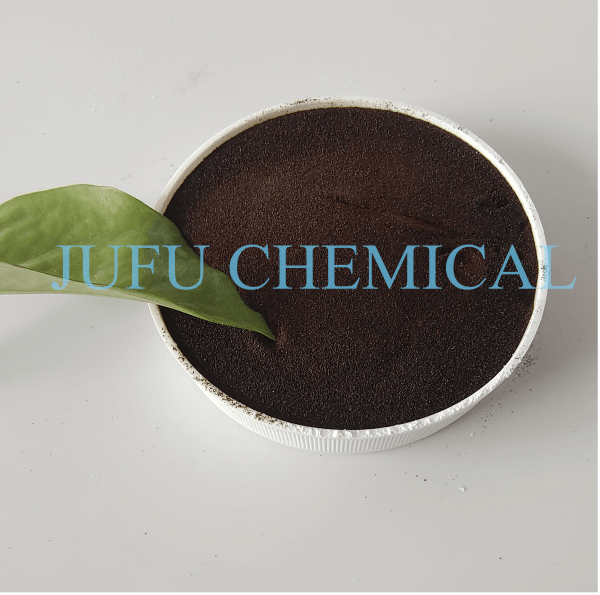

Factors affecting the dispersion stability of disperse dyes:
1. Impurities in the original dye may have an adverse effect on the dispersion state.
2. Changes in dye crystallization are also an important factor. Some crystal states are easy to disperse, while others are not. During the dyeing process, the crystal state of the dye sometimes changes.
3. The dye is dispersed in an aqueous solution. Due to the influence of external factors, the stable state of dispersion is destroyed, which may cause the dye crystallization to increase, particles to aggregate and flocculate.The difference between aggregation and flocculation: the former can disappear again, is reversible, and can be dispersed again by stirring, while the flocculated dye cannot be restored to a stable dispersion. The consequences of dye particle flocculation are: the generation of color points, slow coloring, reduced color, uneven dyeing, and staining in the dye tank. The factors that cause the instability of dye dispersion are roughly: poor quality of dyes, high temperature of dyeing, too long time, too fast pump speed, low pH value, improper auxiliaries, unclean fabrics, etc.
Post time: May-26-2025