

Post Date:1,Jun,2026
1.1 Flowability: refers to the ability of concrete mixture to flow under its own weight and mechanical vibration, uniformly filling the formwork to form a dense concrete body;
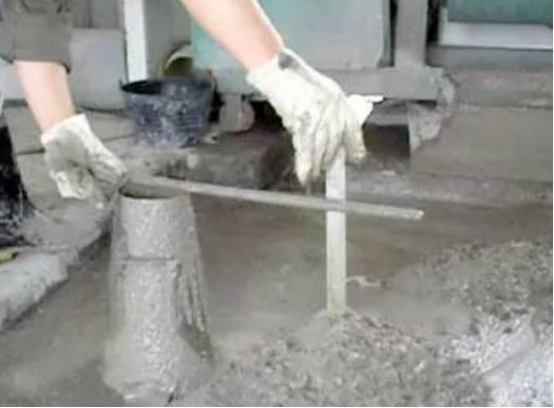
1.2 Slump: the vertical distance from the highest point of the slump center to the top of the slump cone;
1.3 Spread: The slump should be roughly circular. Measure its maximum and minimum diameters; the average of the two diameters is the spread.
1.4 Slump: Evaluated by the ease of tamping. High: Easy to tamp, no feeling of stone blockage; Medium: Slight stone blockage during tamping; Low: Difficult to tamp.
1.5 Sand Content: Evaluated by the ease of smoothing. High: Only one or two trowel strokes are needed to achieve a smooth, honeycomb-free surface; Medium: Five or six strokes; Low: Difficult to smooth, with gaps and stone leakage.
1.6 Water Retention: Refers to the concrete mixture’s ability to retain water during construction, preventing bleeding. Evaluated by the amount of water released from the bottom of the mixture. High: A significant amount of water is released from the bottom of the mixture after lifting the slump cone; Low: A small amount of water is released from the bottom of the mixture after lifting the slump cone; No: No water is released from the bottom of the mixture. 1.7 Cohesiveness: This refers to the cohesive force between the constituent materials of the concrete mixture, ensuring it flows smoothly without dispersing, separating, or segregating during construction. The evaluation method involves lightly tapping one side of the slump with a tamping rod. If the slump gradually sinks during light tapping, it indicates good cohesiveness; if the slump suddenly collapses, partially crumbles, or exhibits aggregate segregation during light tapping, it indicates poor cohesiveness. Flowability, water retention, and cohesiveness have different meanings; they are interconnected but also contradictory. Adjusting workability involves balancing these contradictions.
2.1 Cement: Fineness is inversely proportional to specific surface area. The smaller the fineness, the larger the specific surface area, the higher the water demand, and the better the workability. It can improve cohesion and water retention, reducing bleeding and segregation, and vice versa.
2.2 Fly Ash: Fineness is inversely proportional to water demand. The smaller the fineness, the higher the water demand, and the better the workability, and vice versa.
2.3 Sand: The fineness modulus and gradation of sand have a significant impact on the state of fresh concrete mixtures: too coarse sand has poor cohesion and water retention, while too fine sand has good cohesion and water retention. Ideally, sand should have a fineness modulus between 2.6 and 2.9 and a gradation curve at the median, making it suitable for medium-coarse sand, as its cohesion, water retention, and flowability are easy to control.
2.4 Crushed Stone: The gradation, particle size, surface roughness, and flaky/needle-like structure of crushed stone also have a significant impact on the state of fresh concrete mixtures. Concrete made from crushed stone with poor gradation, uniform particle size, rather rough surface, and high content of needle-like and flaky particles has poor fluidity.
2.5 Water-reducing agent: In the testing of water-reducing agents, the most important factor affecting the state of fresh concrete mixture is its water reduction rate. Because the water reduction rate of the water-reducing agent delivered to the site is unstable, sometimes >25%, sometimes <20%, and even water-reducing agents from the same batch may not be from the same production batch, adjusting the dosage of water-reducing agent when adjusting the state is the most common method, but also the most difficult to control.
Post time: Jun-01-2026