

Post Date:28,Jul,2026
1. Slump Loss: This refers to the loss of slump volume. If the slump loss of fresh concrete mixes was previously normal, but is now occurring too rapidly, the mixing plant’s metering system should be checked immediately for proper functioning and accuracy of the input data. If the metering system is functioning correctly and the input data is accurate, the aforementioned phenomenon in the concrete mix is due to changes in the raw materials. If the fine aggregate has become finer and the fineness modulus has decreased, the sand ratio should be reduced, and the amount of coarse aggregate should be increased accordingly. If the aggregates have not changed, then the change in cement has caused the aforementioned change in the concrete mix, and the admixture dosage should be appropriately increased to ensure the concrete mix meets construction requirements. It is strictly forbidden to adjust the state of the concrete mix by increasing the water content, as this can lead to a decrease in concrete strength due to an increased water-cement ratio.
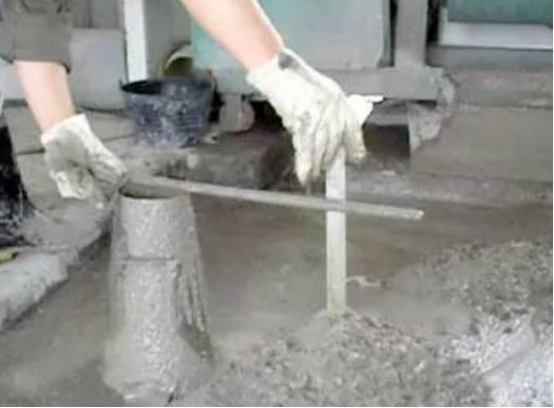
2. Bleeding: This refers to the presence of a thin, slurry-like substance in the fresh concrete mix, which is not mortar; this is known as bleeding. If bleeding occurs, but the concrete paste volume is within acceptable limits, this indicates a change in the cement or admixtures. The admixture’s water content (mWo), strength (FC), durability (D), workability (T), water-cement ratio (w/c), and sand ratio (BS) may be excessive. To ensure the concrete slump is maintained, appropriately reduce the admixture dosage to meet construction requirements. If reducing the admixture dosage lowers the slump, or if bleeding still occurs, it indicates poor compatibility between the admixture and cement. The admixture manufacturer needs to adjust the admixture formula, increasing the plasticizing agent content.
3. Segregation: This refers to the separation of mortar from aggregate. Segregation occurs in freshly mixed concrete, but the cement paste does not exhibit bleeding. To address this situation, first, check if the sand ratio is appropriate. If the sand ratio is too low, segregation may be caused by insufficient sand. If the sand ratio is appropriate, the fineness modulus of the sand may be too high, or the washing of sand may have removed ultrafine sand particles smaller than 0.16mm, resulting in a lack of ultrafine sand. In this case, the sand ratio can be appropriately increased. If increasing the sand ratio still doesn’t solve the problem, ultrafine sand should be added appropriately for adjustment. Alternatively, the coarse aggregate gradation may be poor, requiring timely adjustment of the coarse aggregate blending ratio to ensure it meets standards. If the concrete still segregates after the coarse aggregate meets standards, the admixture’s cohesiveness is poor, requiring the admixture manufacturer to add thickeners to improve its cohesiveness. 1701 concrete thickener and water-retaining agent requires different modifiers depending on the type of cement.
4. Commissioning: The mixing plant should commission the concrete mixture, ensuring both the workability and strength of the concrete. With this goal in mind, the first batch of concrete at the mixing plant should be tested in multiple batches. The initial test should assess the workability of the concrete mixture. Based on the test results, the material usage for the second batch of concrete should be estimated. After each test, further testing should be conducted to determine if the mix proportions need further adjustment, continuing until the concrete test results meet the construction requirements. During adjustments, at least the following four factors must be considered: first, the extended time due to transportation distance; second, the construction process, whether to use a pump truck or a crane for material loading; third, the pouring location, the density of reinforcing steel and corrugated pipes; and fourth, the construction environment, such as varying temperatures and weather conditions. Based on the results of the concrete mixture test, the official construction mix proportions will be determined.
Post time: Jul-28-2026