

Why are water-reducing admixtures used in concrete?
Water is an essential component of concrete, yet increasing water content is not an ideal way to improve its workability. Continuously adding mixing water to achieve higher slump raises the water-to-binder ratio, which can compromise the properties of the hardened concrete. The fundamental mechanism of water-reducing admixtures is to improve the dispersion of cement particles in water. They allow for reduced water usage while maintaining required workability, or conversely, enhance concrete fluidity without increasing the water content. Consequently, water-reducing admixtures are a crucial class of additives in modern concrete.
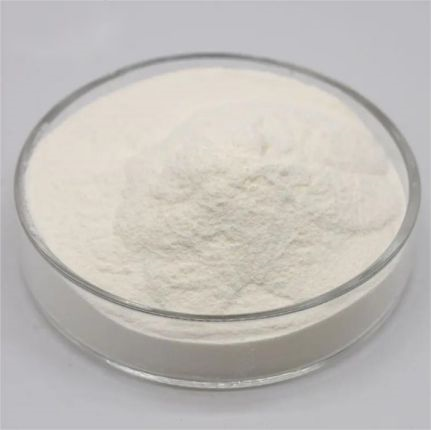
What is a polycarboxylate superplasticizer?
Polycarboxylate superplasticizers are commonly referred to as PCE. They are a type of high-performance water-reducing component widely used in modern concrete. PCEs interact with cement particles through their molecular structure, improving the dispersion of the particles. Depending on product design and application objectives, PCEs can be further tailored to achieve specific performance characteristics.
1. Water-reducing polycarboxylate superplasticizers (PCE)
Water-reducing PCEs focus primarily on initial dispersing capability and water-reduction efficiency. They are typically used in concrete systems that require specific initial fluidity and a reduced water-to-binder ratio.
2. Slump-retaining polycarboxylate superplasticizers (PCE)
Slump-retaining PCEs focus on maintaining concrete workability over time. For ready-mixed concrete involving long transport times, it is insufficient to consider only the slump at the time of discharge; the workability must also be monitored at 30, 60, and 90 minutes—or even longer intervals. Consequently, the formulation of admixtures for ready-mixed concrete often requires striking a balance between water reduction and slump retention.
What is a naphthalene-based high-performance water reducer?
Naphthalene-based high-performance water reducers represent another class of concrete water-reducing agents with a long history of use; they are typically based on sulfonated naphthalene-formaldehyde condensates. These agents remain in practical use within certain markets and cement product systems. They differ from polycarboxylate-based water reducers (PCEs) in terms of chemical structure and functional characteristics. PCEs offer greater flexibility in molecular design, allowing for the tailoring of water-reduction and slump-retention properties to meet specific requirements. In contrast, naphthalene-based water reducers have their own distinct application systems, raw material compatibility profiles, and cost structures. Therefore, the choice between PCEs and naphthalene-based water reducers should be based on an assessment of actual concrete performance requirements, production processes, and economic factors.
Post time: Nov-16-2026